
Intellectual Architecture
Transform your living space into a sophisticated archive where physical books become curated artifacts of knowledge and aesthetic precision.
Begin CurationCuration Philosophy

Selection Methodology
Each volume is evaluated through multiple lenses: thematic coherence, visual harmony, and spatial dynamics. Our approach treats books as structural elements within architectural compositions.
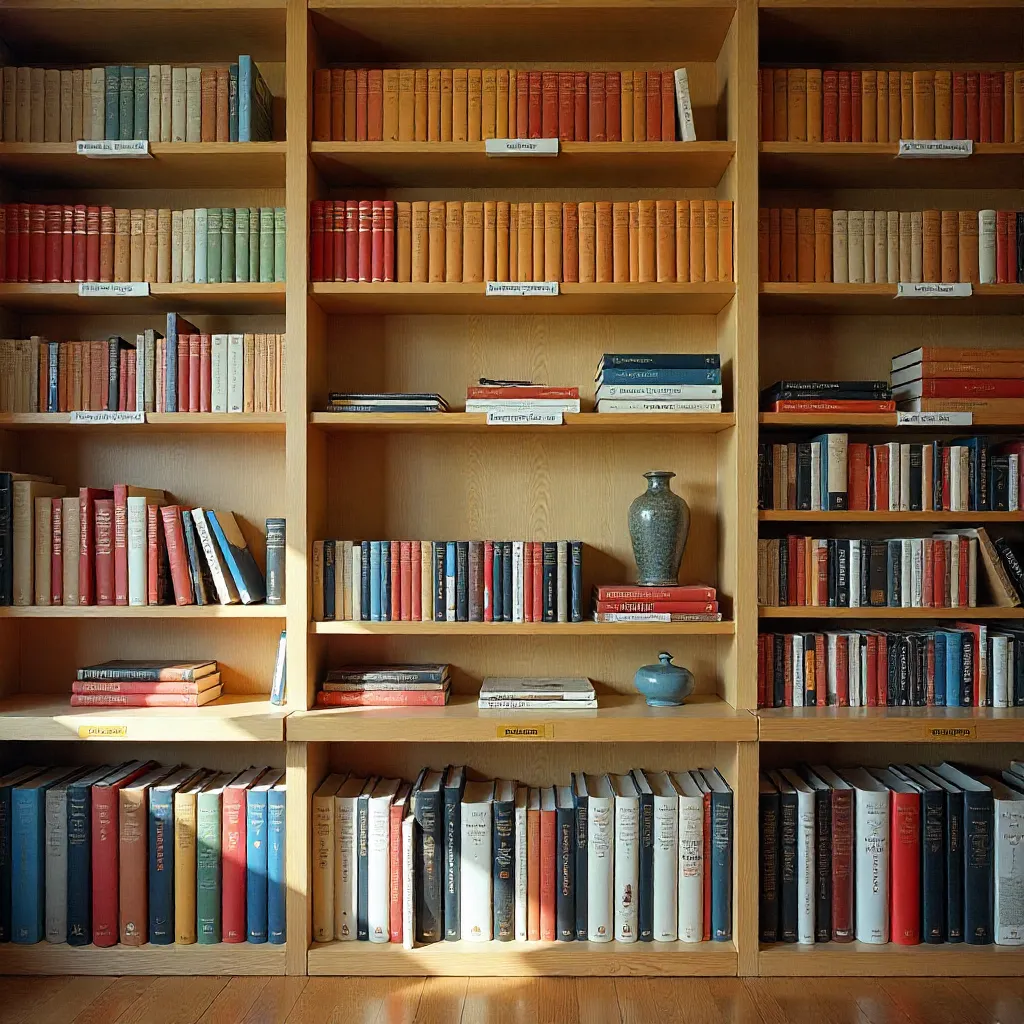
Chromatic Intelligence
Color frequency analysis determines optimal spine arrangements. The chromatic engine calculates visual weight distribution to create balanced compositions that function as both information systems and aesthetic statements.

Spatial Architecture
Three-dimensional modeling accounts for shelf depth, lighting angles, and viewing perspectives. Books are positioned to create visual rhythm while maintaining functional accessibility.

Light & Atmosphere Integration
Ambient lighting conditions inform book placement decisions. Each curated section considers how natural and artificial light interact with spine textures and cover materials.
Curation Systems
Metadata Scanning
Physical dimensions, publication era, and genre classification are processed to predict visual compatibility. The spine scanner generates real-time analytics for each potential arrangement.
Explore EngineGenre Mapping
Intellectual density calculations reveal thematic relationships between categories. Philosophy and science fiction create distinct visual signatures that can be harmonized or contrasted.
View TopographyEnvironmental Profiles
Each completed project includes acoustic and lighting documentation. Book collections function as sound dampening systems while reflecting ambient light in calculated patterns.
Study Portfolio
Space Integration
Whether your environment follows minimalist principles or embraces industrial aesthetics, book curation adapts to architectural context while maintaining visual coherence.
Technical Approach
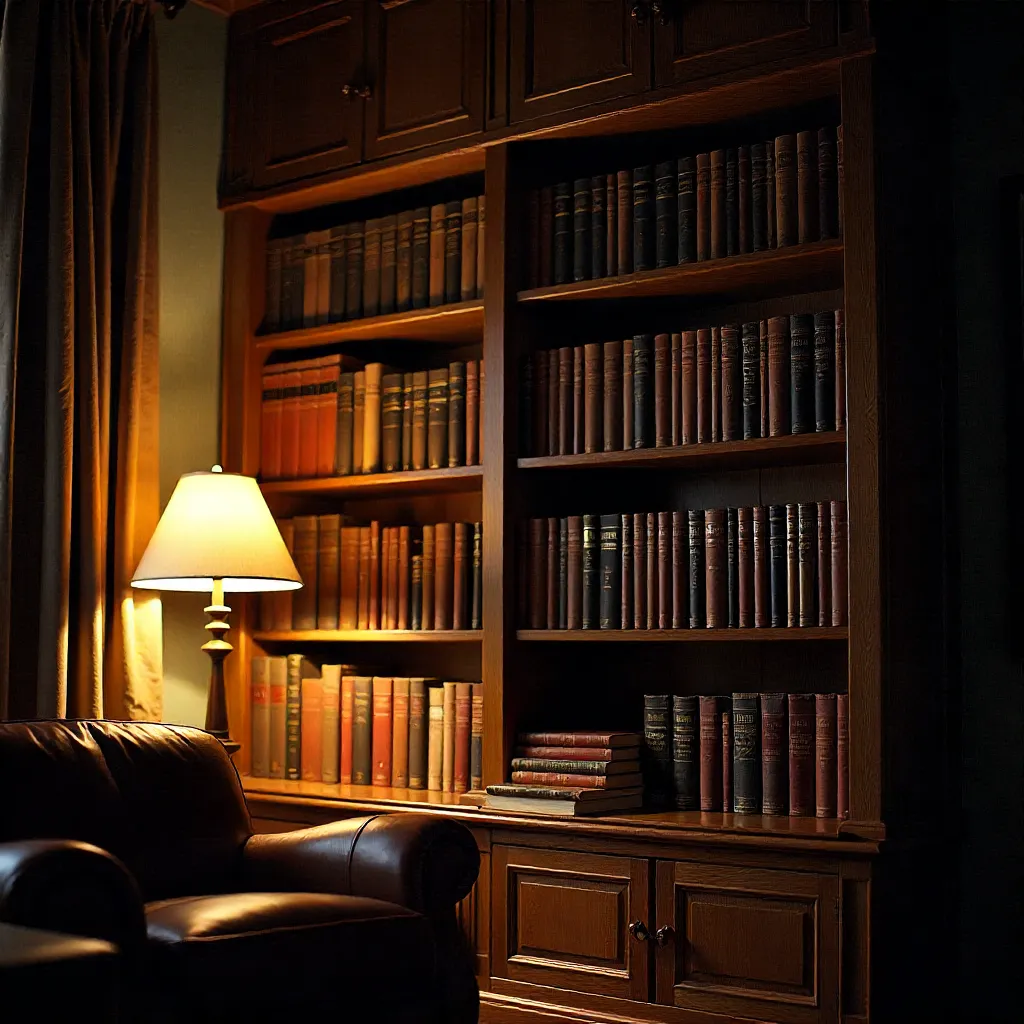
Dimensional Analysis
Precise measurements of shelf width, ceiling height, and viewing angles determine optimal book placement. Mathematical models predict visual weight distribution before physical arrangement.

Material Considerations
Cover finishes, paper quality, and binding types influence light reflection properties. Matte surfaces absorb ambient light while glossy covers create focal points through reflection.

Begin Your Curation
Connect with our team to discuss how book selection can transform your space into an intellectual archive that balances aesthetics with functionality.
Contact Us